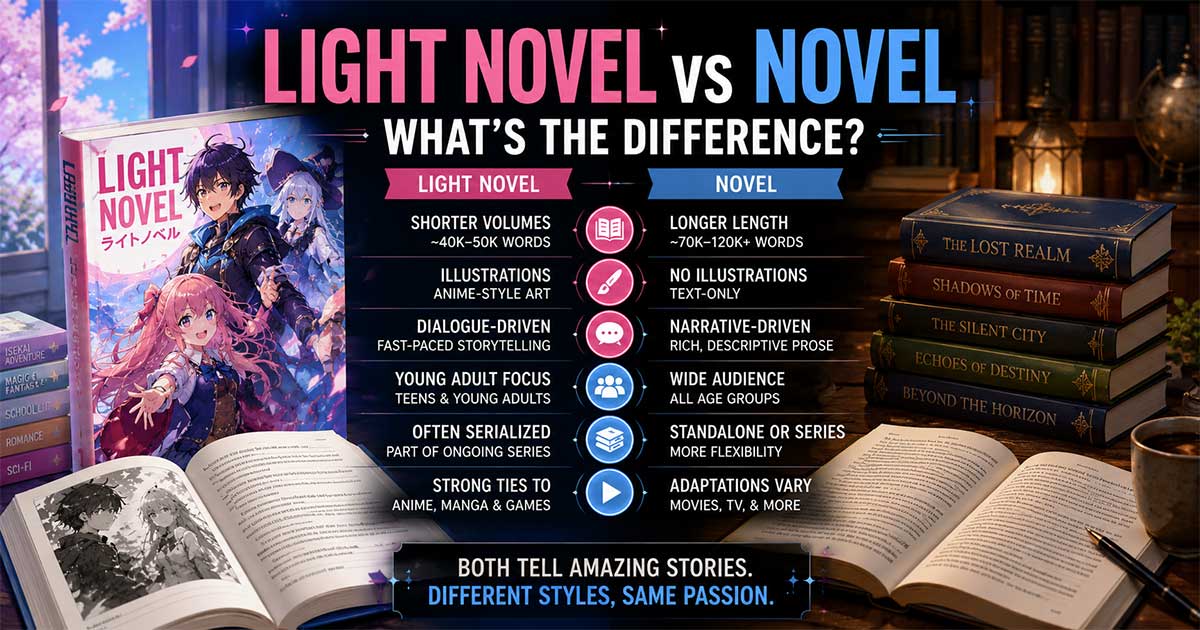
A light novel is more than just a type of Japanese fiction. It represents a storytelling format that combines engaging prose, memorable characters, and occasional illustrations to create an immersive reading experience. Originally developed in Japan, the light novel has become popular around the world, inspiring countless manga, anime, and original works by international authors.
This section explores every aspect of the light novel format. You'll find articles explaining what defines a light novel, how it differs from traditional novels and manga, and why it has become one of the most influential forms of modern fiction.
Beyond its recognizable visual style, a light novel stands out for its accessible writing, strong focus on character development, and serialized storytelling. While many stories take place in fantasy worlds, the format also embraces romance, science fiction, mystery, slice of life, adventure, comedy, and many other genres.
A light novel is also a favorite format for exploring imaginative settings such as isekai, where a protagonist is transported to another world. However, the appeal of a light novel goes far beyond fantasy. The format offers the flexibility to tell intimate personal stories, epic adventures, political conflicts, or emotional coming-of-age journeys.
As interest in Japanese fiction continues to grow, the light novel has evolved into a global phenomenon. Readers can now enjoy both officially translated Japanese series and original English light novel projects inspired by the same narrative traditions.
Whether you're discovering the format for the first time or looking to deepen your understanding of the light novel, the articles gathered here explore its history, storytelling techniques, genres, and growing influence on modern fiction.