
Light Novel vs Manga
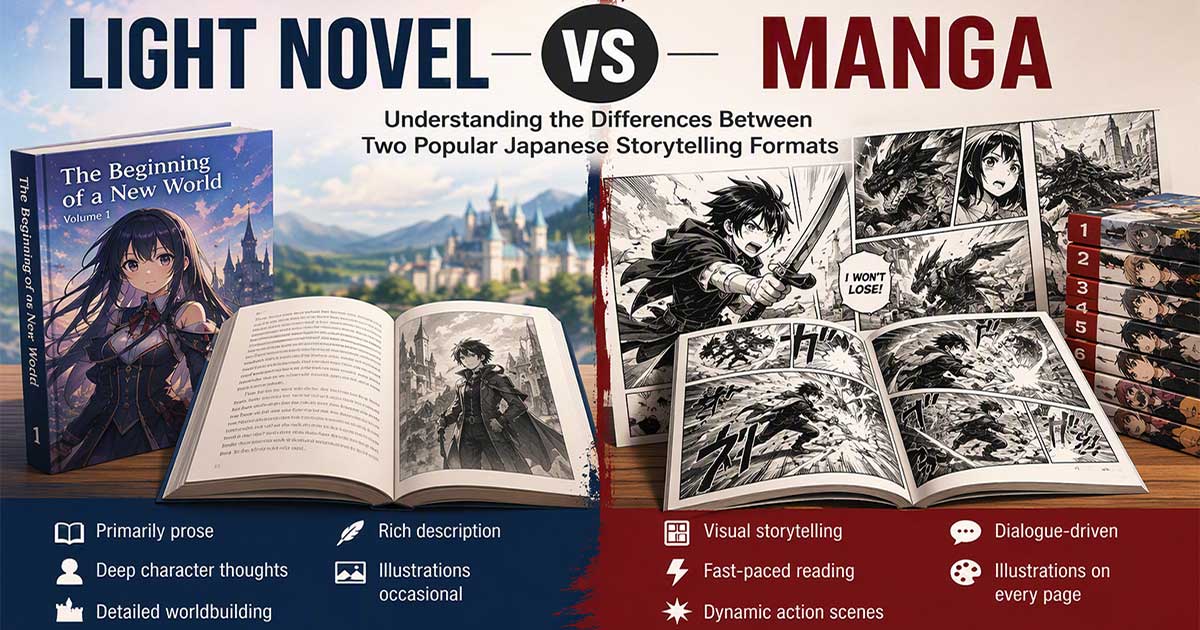
Light Novel vs Manga: Understanding the Differences Between Two Popular Japanese Storytelling Formats
Japanese storytelling has become a global phenomenon. From bestselling manga to blockbuster anime adaptations, millions of readers discover new stories every year. Yet one format often remains misunderstood outside Japan: the Light Novel.
Many people assume that a Light Novel is simply a manga written in prose or that both formats tell stories in the same way. While they frequently share genres, themes, and audiences, they are fundamentally different forms of storytelling.
Understanding these differences helps readers choose the format that best suits their preferences and provides greater appreciation for how many popular franchises are created.
What Is a Light Novel?
A Light Novel is a style of Japanese novel primarily written for teenagers and young adults. Unlike traditional novels, Light Novels are designed to be highly accessible, using straightforward language, relatively short volumes, and occasional black-and-white illustrations that enhance important scenes.
Understanding what exactly a Light Novel is also requires looking at its publishing tradition, format, illustrations, and relationship with Japanese popular fiction
Although illustrations contribute to their identity, the text remains the primary storytelling medium. Readers imagine the world largely through descriptive writing rather than sequential artwork.
Many internationally successful franchises began as Light Novels, including:
- Sword Art Online
- Re:ZERO − Starting Life in Another World
- Mushoku Tensei
- Overlord
- The Rising of the Shield Hero
- That Time I Got Reincarnated as a Slime
In many cases, these works were later adapted into manga, anime, games, and films.
What Is Manga?
Manga is the Japanese equivalent of comics or graphic novels. Instead of relying primarily on written narration, manga tells stories through sequential artwork combined with dialogue.
Visual storytelling is its greatest strength. Facial expressions, action sequences, scenery, and character movement are all communicated directly through illustrations.
Unlike a Light Novel, readers experience events visually rather than imagining them from descriptive prose.
Popular manga titles include:
- One Piece
- Naruto
- Demon Slayer
- Attack on Titan
- Jujutsu Kaisen
Some manga are original works, while others adapt existing Light Novels.
Light Novel vs Manga: The Main Differences
Although both formats often share similar genres, they differ significantly in how they tell stories.
Feature | Light Novel | Manga |
|---|---|---|
| Primary storytelling medium | Written prose | Sequential artwork |
| Illustrations | Occasional | Present on nearly every page |
| Reading pace | Generally slower | Generally faster |
| Character thoughts | Extensive internal narration | Usually communicated visually |
| Worldbuilding | Often more detailed | Typically more condensed |
| Action scenes | Described through text | Shown directly through artwork |
| Reading experience | Similar to a traditional novel | Similar to comics or graphic novels |
| Common adaptations | Manga, anime, games | Anime, films, games |
Storytelling Style
The biggest distinction lies in the narrative itself.
A Light Novel focuses on written prose. Readers spend more time inside a character's thoughts, emotions, motivations, and internal conflicts.
Manga, by contrast, communicates information visually. Emotions are shown through artwork, pacing is controlled by panel layouts, and dialogue generally carries the story forward.
This difference means that Light Novels often explore psychological development in greater depth, while manga excels at visual impact.
Reading Experience
Reading a Light Novel and a traditional novel can offer similar prose-based experiences, although their publishing conventions and presentation often differ.
The pace is generally slower, allowing readers to imagine the world in their own minds.
Reading manga feels faster because illustrations immediately communicate settings, action, and emotions.
Neither approach is superior. They simply offer different experiences.
Illustrations
One common misconception is that Light Novels are heavily illustrated.
In reality, most Light Novels include only:
- a color cover,
- a few color pages,
- several black-and-white illustrations throughout the volume.
The majority of every book consists entirely of text.
Manga, on the other hand, contains illustrations on nearly every page.
Character Development
Because prose provides unlimited space for internal narration, Light Novels frequently offer more detailed character development.
Readers learn:
- what characters think,
- why they make certain decisions,
- how their personalities evolve,
- what emotions they hide.
Manga often conveys these elements visually rather than explicitly explaining them.
Which Format Tells Better Stories?
Neither format is inherently better.
Instead, each format excels in different areas.
A Light Novel generally offers:
- richer internal monologues,
- more detailed worldbuilding,
- deeper political systems,
- longer character arcs,
- greater narrative flexibility.
Manga generally offers:
- stronger visual storytelling,
- faster pacing,
- memorable action scenes,
- expressive character designs,
- immediate accessibility.
Many readers enjoy both because each provides a unique perspective on the same story.
Why Many Anime Begin as Light Novels
One reason the Light Novel industry has grown so rapidly is that publishers increasingly use successful novels as the foundation for multimedia franchises.
The typical progression often follows this path:
Light Novel → Manga adaptation → Anime adaptation → Merchandise → Games
This approach reduces financial risk because publishers already know whether readers enjoy the original story.
Many globally recognized anime originated this way.
Examples include:
| Light Novel | Manga | Anime |
|---|---|---|
| Re:ZERO | Yes | Yes |
| Overlord | Yes | Yes |
| Mushoku Tensei | Yes | Yes |
| Sword Art Online | Yes | Yes |
| 86 Eighty-Six | Yes | Yes |
The Light Novel usually contains the most complete version of the story.
Worldbuilding: Where Light Novels Shine
One of the greatest strengths of the Light Novel format is worldbuilding.
Fantasy kingdoms, magic systems, religions, politics, economics, military organizations, and historical events can all be explored extensively without interrupting the narrative.
This flexibility explains why genres such as:
- Fantasy
- Isekai
- Science Fiction
- Romance
- Psychological Drama
have flourished within the Light Novel industry.
Readers who enjoy immersive fictional worlds often appreciate the additional depth available in prose.
Action Scenes: Where Manga Excels
Manga has a natural advantage when depicting action.
A sword fight that requires several pages of description in a Light Novel may unfold across only a few dramatic panels in manga.
Artists use:
- panel composition,
- motion effects,
- facial expressions,
- perspective,
- visual rhythm,
to create exciting sequences that feel cinematic.
This is one reason why action-oriented stories often become especially popular after receiving manga or anime adaptations.
Which One Should Beginners Read?
The answer depends entirely on personal preference.
Readers who enjoy novels, detailed storytelling, and complex characters may prefer Light Novels.
A selection of Light Novels to read for beginners can make it easier to discover which genres, storytelling styles, and series best match those preferences.
Readers who appreciate visual storytelling, dynamic pacing, and artwork may gravitate toward manga.
Many fans eventually read both.
In fact, numerous enthusiasts first discover an anime, continue with the manga, and later read the original Light Novel to experience the complete story.
Are Light Novels Longer Than Manga?
Comparing their length is difficult because they use entirely different formats.
A single Light Novel volume usually contains between 40,000 and 70,000 words, depending on the publisher and series.
Manga volumes typically contain around 180 to 220 illustrated pages, with far fewer words overall.
However, a long-running manga series can easily exceed dozens or even hundreds of volumes.
Likewise, many successful Light Novel series continue for twenty or more volumes.
Which Format Is More Popular?
Globally, manga currently enjoys greater mainstream popularity.
Its visual format appeals to readers of all ages and translates easily across cultures.
The Light Novel market, however, has experienced remarkable international growth over the past decade.
English publishers now release hundreds of translated Light Novels each year, and digital publishing has significantly expanded global accessibility.
As anime continues introducing audiences to new franchises, increasing numbers of readers seek out the original Light Novels to experience stories beyond the animated adaptations.
Can a Manga Adapt Everything From a Light Novel?
Not always.
Because manga chapters have limited space, adaptations often condense or omit material.
Common changes include:
- shortened conversations,
- fewer internal monologues,
- simplified political explanations,
- condensed worldbuilding,
- accelerated pacing.
As a result, readers who enjoy a manga frequently discover additional depth when reading the original Light Novel.
The reverse is also true: an excellent manga adaptation can visualize scenes that readers imagined differently while reading the novel.
The Future of the Light Novel
The growing popularity of anime streaming services has introduced millions of viewers to franchises originally published as Light Novels.
This trend has increased international demand for official translations and expanded the visibility of Japanese publishing worldwide.
Many industry observers expect Light Novels to continue gaining readers as more adaptations reach global audiences.
For aspiring writers, the format also demonstrates how compelling prose can become the foundation for successful multimedia franchises.
Conclusion
The debate between Light Novel vs manga is less about determining a winner and more about understanding two complementary forms of storytelling.
A Light Novel offers detailed prose, deeper character development, and expansive worldbuilding that allows readers to imagine every aspect of the story.
Manga transforms narratives into a visual experience, using artwork and dynamic pacing to create immediate emotional impact.
Many of today's most successful Japanese franchises combine both formats, allowing readers to experience the same world through different creative approaches.
Whether you prefer prose or illustrations, exploring both formats provides a richer appreciation of Japanese storytelling and reveals why the Light Novel has become one of the industry's most influential creative foundations.
Frequently Asked Questions
Is a Light Novel the same as manga?
No. A Light Novel is primarily a prose novel with occasional illustrations, while manga tells its story mainly through sequential artwork and dialogue.
Which came first, the Light Novel or the manga adaptation?
Many modern franchises begin as Light Novels before being adapted into manga and later anime, although some manga are entirely original works.
Are Light Novels more detailed than manga?
Generally, yes. Because they rely on prose, Light Novels usually include more extensive worldbuilding, character thoughts, and narrative detail.
Should beginners start with a Light Novel or manga?
Readers who enjoy books may prefer Light Novels, while those who favor visual storytelling often find manga easier to approach. Both formats offer rewarding experiences and often complement one another.
You should also read:
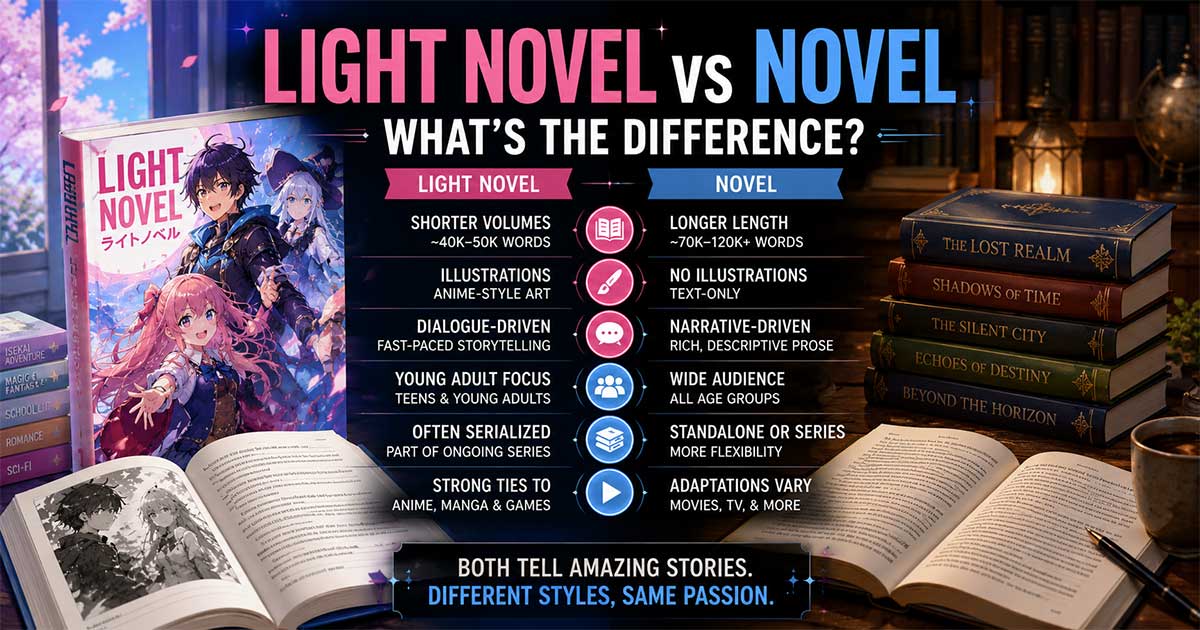
Light Novel vs Novel
Light Novel vs Novel: What’s the Difference? The distinction between a Light Novel and a traditional novel can seem confusing at first. Both are books. Both rely primarily on prose. Both can tell complex stories, develop memorable characters, span multiple volumes, and explore genres ranging…
Continue reading...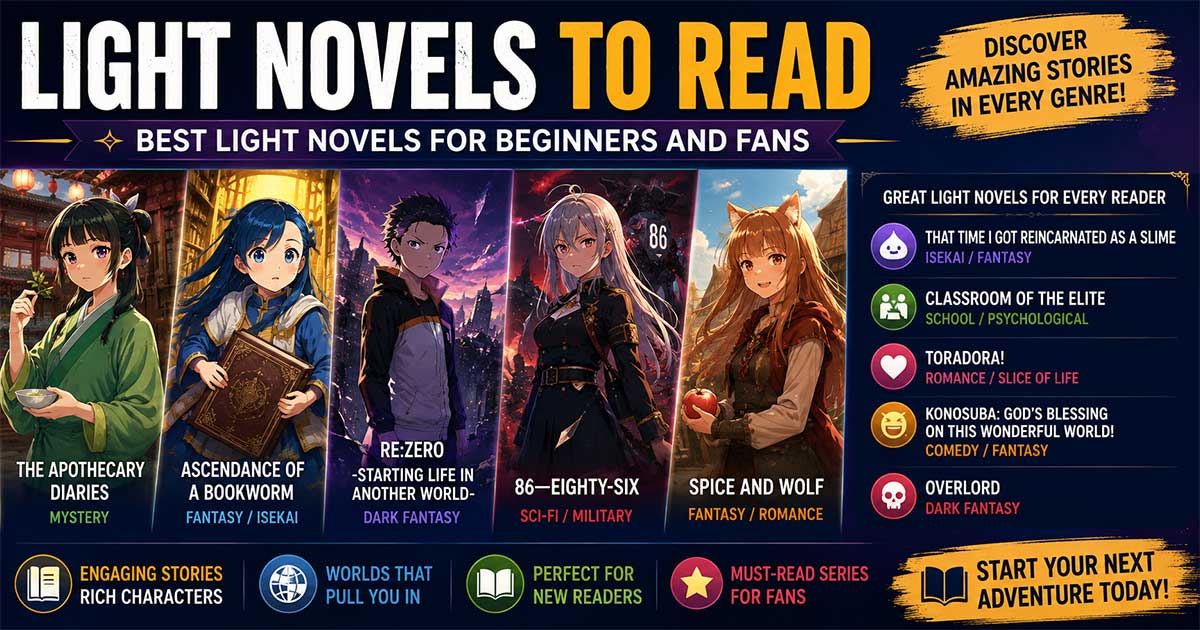
Light Novels to Read
Light Novels to Read: Best Light Novels for Beginners and Fans Finding the best Light Novels to read can be surprisingly difficult. The English-language market now includes everything from enormous isekai adventures and psychological thrillers to historical mysteries, romantic dramas, science fiction, and comedy. For…
Continue reading...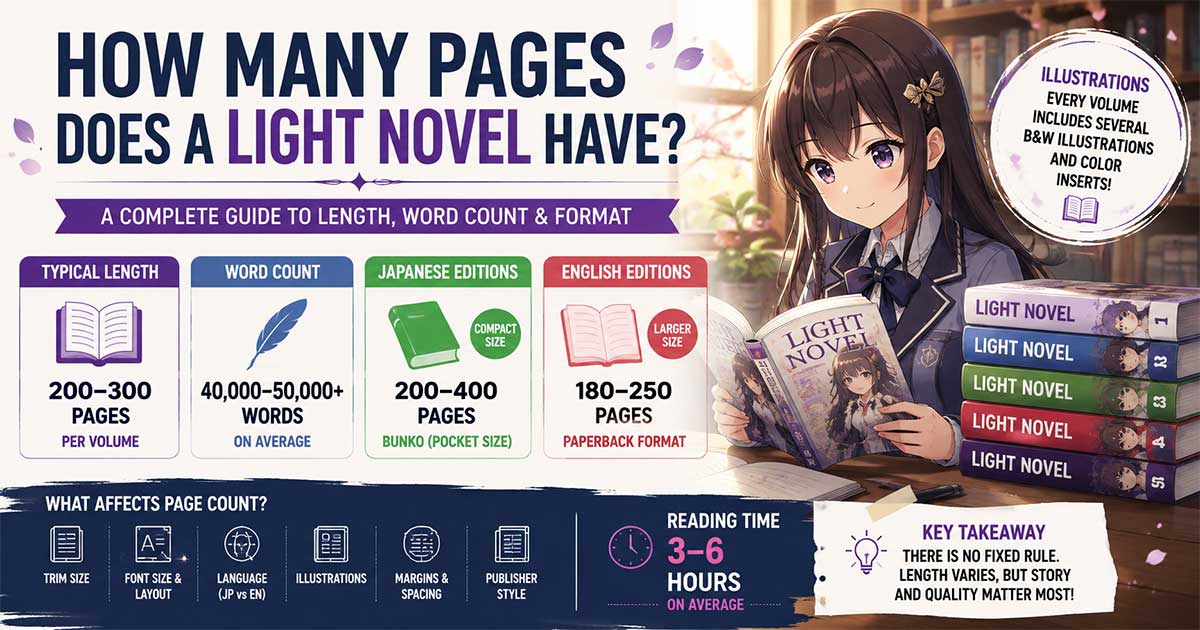
How Many Pages Does a Light Novel Have?
How Many Pages Does a Light Novel Have? Length, Word Count and Format Explained A typical Light Novel contains roughly 200 to 300 pages per volume, but that number is only a useful reference point—not a publishing rule. Some volumes are considerably shorter, while others…
Continue reading...